The Science behind OpenDecide
A century of Organizational Behavioral Science research is the foundation of everything OpenDecide does, and the reason we can accelerate performance the way we do
Why OpenDecide is different
OpenDecide isn't powered by a generic language model like ChatGPT or Microsoft Copilot. We use an open-source AI model enhanced with RAG (Retrieval-Augmented Generation) technology, specifically trained on organizational behavior research papers and validated through data from 3,500+ real business teams.
This specialized training makes our AI an expert in organizational performance, team performance, and operational excellence.
Theoretical Foundations
OpenDecide's system design and result analysis are grounded in Hackman's Theory of Team and Organizational Performance (Hackman et al., 2005), which defines team and organizational effectiveness through not only results but also learning capability and maintaining healthy social processes.
We also leverage Ilgen's IMOI Model (Ilgen et al., 2005) to illustrate the cyclical nature of team dynamics and the relationships between relevant components of effectiveness (direct, mediation, moderator effects).
Multiple meta-analyses and literature reviews guided us in selecting the critical dimensions to focus on and determining the recommended approach for teams to address these dimensions based on antecedent relationships.
28+ Scientifically Validated Scales
The AI captures how your teams truly operate by analyzing 28+ carefully selected scientific factors that assess execution and effectiveness as a system. Like triangulation for satellites, where multiple coordinates are needed to pinpoint an exact position, our AI requires multiple data points to reveal what's actually happening in your teams' functioning. Individual responses naturally contain bias—the engine behind OpenDecide applies complex statistical methods to reduce noise and highlight the most reliable shared patterns across the team, revealing dynamics even the team itself hasn't (yet) recognized. These scales have been validated through organizational behavior and business management research, with ICC (Intraclass Correlation Coefficient) values typically exceeding 0.8.
During translation, we use a rigorous back-translation and double-blind translation process to maintain scientific integrity across languages. This ensures our AI delivers consistent, research-backed insights regardless of the language your teams operate in.
Sample of research studies embedded in the model
Goal Setting & Execution
Lee, C., Bobko, P., Earley, P. C., & Locke, E. A. (1991). An empirical analysis of a goal setting questionnaire. Journal of Organizational Behavior, 12(6), 467-482.
Task Interdependence
Van der Vegt, G. S., & Janssen, O. (2003). Joint impact of interdependence and group diversity on innovation. Journal of Management, 29, 729-751.
Organizational Justice
Ambrose, M. L., Rice, D. B., & Mayer, D. M. (2021). Justice Climate and Workgroup Outcomes. Journal of Business Ethics, 172(1), 79-99.
Our Research Team
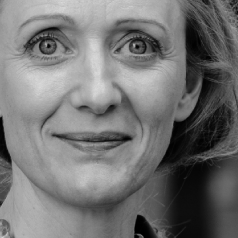
Dr. Marion Fortin
Professor of Management, Organizational Behavior Science
Toulouse School of Management, Director of TSM Doctoral Program, TSM Research UMR 5303 CNRS, Université Toulouse 1 Capitole
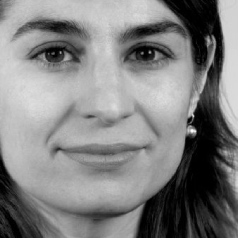
Dr. Tessa Melkonian
Professor of Management, Organizational Behavior Science, Former Dean of Faculty and Research
Emlyon Business School

Dr. Yannick Griep
Associate Professor of Management, Organizational Behavior Science
Radboud University, Netherlands, and Affiliated Faculty Member, Stockholm University, Sweden
A Reciprocal Model Advancing Research and Enterprise Practice
The data we collect is anonymized and then used by scientists to improve their models. In return, researchers allow us to analyze and integrate the latest discoveries into the platform.
This creates a continuous feedback loop: academic rigor meets real-world application, and practical insights inform theoretical advancement. Everyone wins—especially the teams we serve.