Design the future-state process using ready-to-use workshops
Redesigning a process doesn't need to start from a blank page. A ready-to-use workshop gives every team a structured way to build its future-state process together.
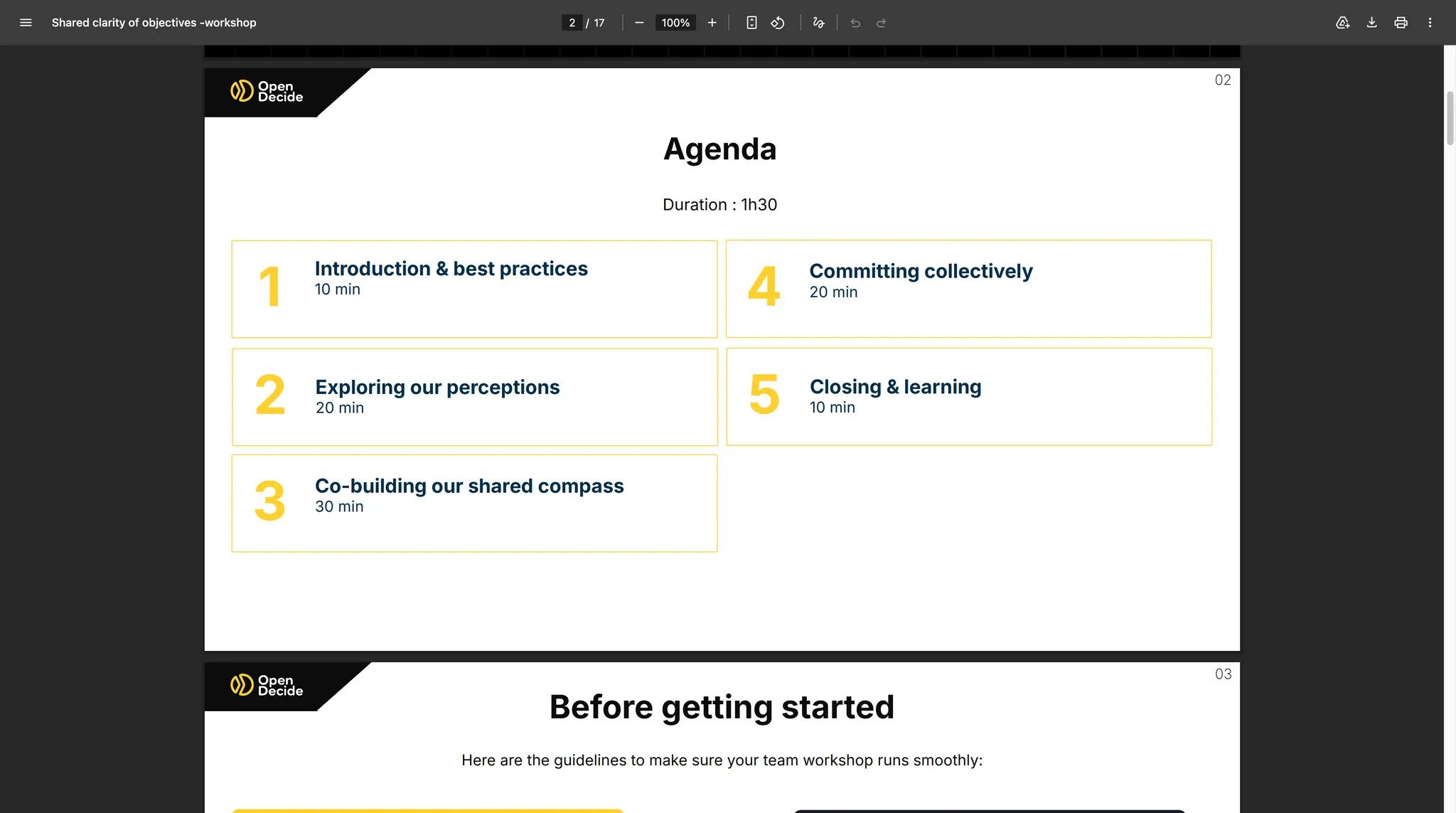
Science-based, AI and expert-generated workshop
Each workshop combines AI generation with content validated by process-design experts, so what the team runs together is both fast to produce and grounded in practice.
Regular updates
Workshop content is refreshed as new research and practices emerge, so the team is never running a static template that has gone stale.
Easy to use
No facilitation training required: the workshop is built to be picked up and run by any team lead, without outside help.
Short: 90 minutes max
Every workshop fits inside a single 90-minute session, keeping the design work contained instead of spreading it over weeks.
Downloadable
The workshop template can be downloaded to your computer, ready to run offline or share with the team ahead of the session.
Explore best practices from high-performing teams
Discover and explore proven practices from high-performing teams elsewhere, get inspired, and reuse what fits instead of starting from scratch.
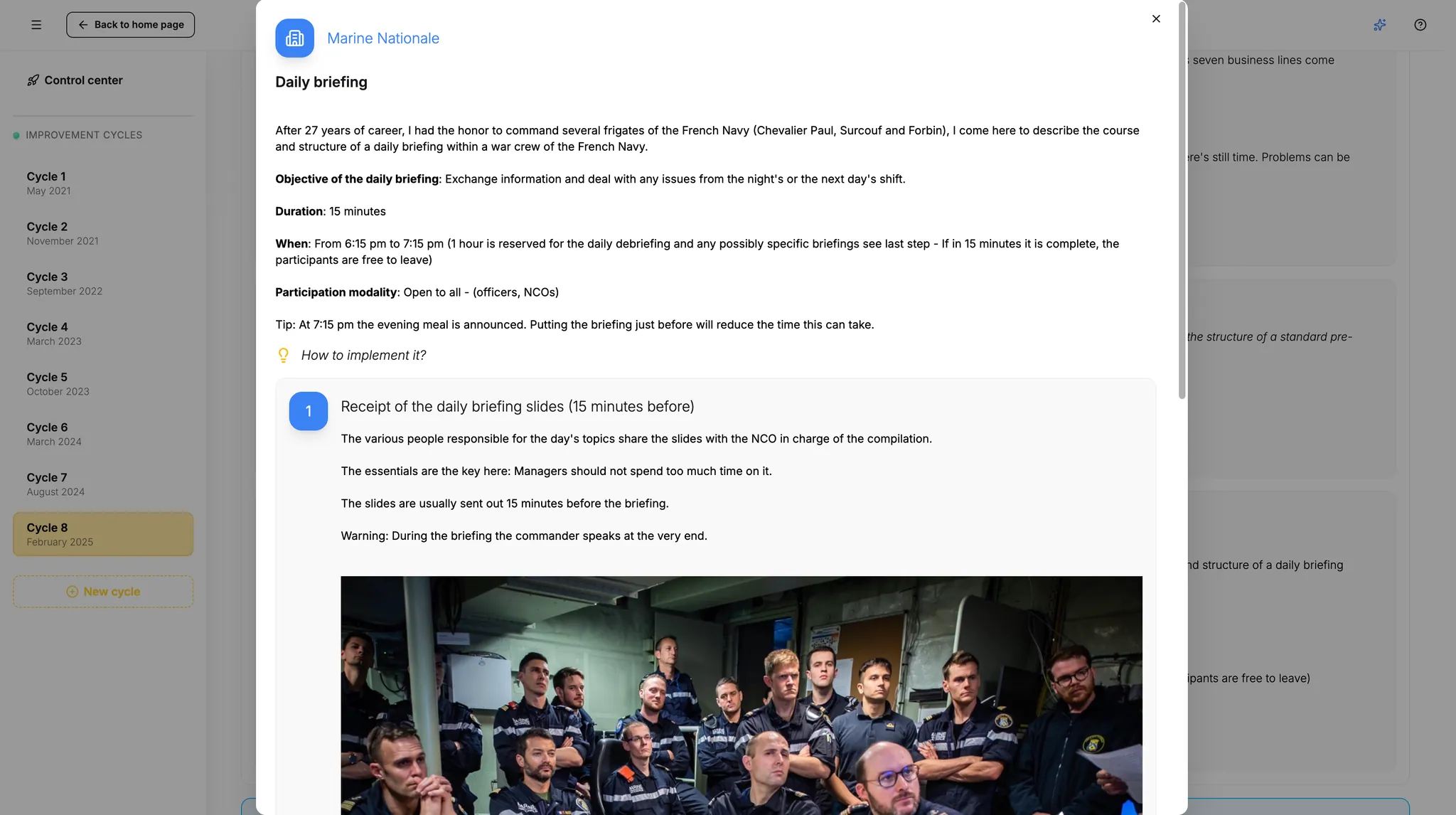
Explore more than 100+ best practices
A library of over one hundred best practices, drawn from high-performing teams, gives every workshop a running start instead of a blank page.
Different industries
Practices are sourced across industries, so a team isn't limited to solutions from its own sector when a better one exists elsewhere.
Operational format
Each practice is written in an operational format, ready to apply, not an abstract case study to interpret.











Real-world practices
Every entry comes from something a real team actually did, not a theoretical best practice with no track record.
Regularly updated
The library keeps growing as new practices are validated, so the pool of ideas a team can draw from never goes stale.
Manage the change as it happens
Turning a voted priority into a new way of working is itself a change to manage. OpenDecide keeps that change visible and adjustable in real time, not planned once and left alone.
Ask any question or get advice from the AI assistant
Ask the assistant anything about the change, from what to prioritize to how to explain it to the team, and get an answer grounded in your own context, not a generic playbook.
Update how the change is managed, on the go
The plan behind an improvement is never fixed in stone. As the team learns more, it can adjust how the change is being managed without restarting the whole process.
Understand the factors
Every factor behind the plan is explained in context, so the team knows not just what is changing but why it matters to the way the team actually works.
Update who is in charge
The owner of the change can be reassigned at any point, so accountability always reflects who is actually driving the work, not who was assigned at the start.
See in one click what the team's upvoted priority was
The priority the team voted for stays one click away at all times, so the objective driving the current cycle is never in doubt.
Redirect teams to the right internal resources
Some answers already exist inside the organization. OpenDecide points each team to them instead of asking it to look for what's already been solved.
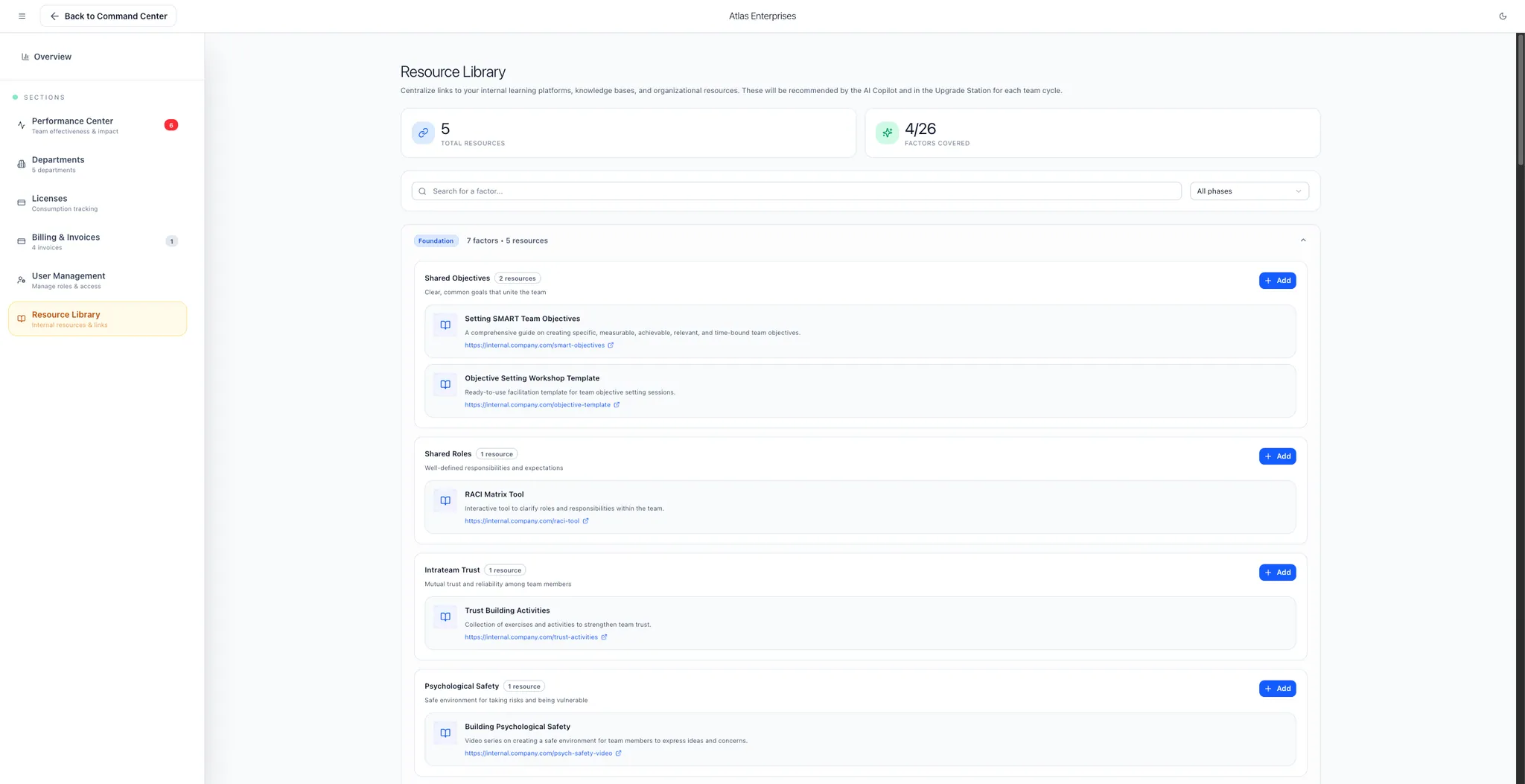
Explore the existing resources of your organization
Before creating anything new, teams can explore what the organization already has, from playbooks to training content, and build on what already exists instead of starting over.
Add external links to pre-existing internal resources
Existing internal resources are linked directly into the workflow, so teams reach what already exists instead of rebuilding it.
Recommended: a guide on decision rules, based on your lowest factor.
AI recommendation feed integration
An AI-driven feed recommends resources based on the team's own factors, surfacing what's relevant instead of everything available.
Add targeted resources for each factor
Each factor comes with resources chosen specifically for it, so the team is pointed toward help that matches its actual gap.
Direct to any open or gated source
Resources can point to anything from open web content to gated internal systems, such as an OpsEx platform, intranet, or LMS, wherever the organization already keeps its knowledge.